Homemade Croissants Without Mixer
Highlighted under: Sweet & Baked
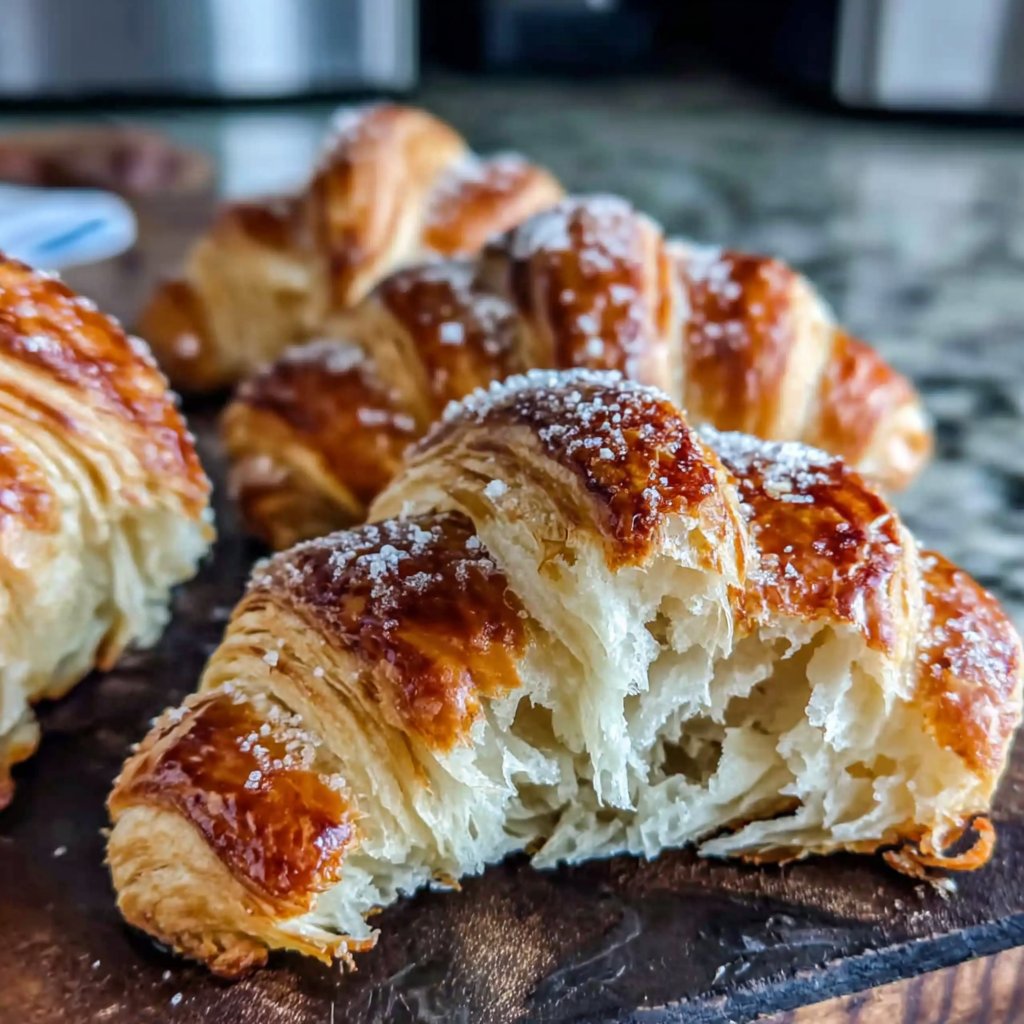
I love making croissants at home, especially when I can do it without a mixer! There’s something incredibly satisfying about working with the dough by hand, feeling its texture change as I incorporate the butter layers. The result is a flaky, buttery pastry that fills the kitchen with a delightful aroma. With just a few simple ingredients, I have created a recipe that captures the essence of traditional croissants, allowing me to enjoy this French delicacy anytime.

When I first attempted croissants, I was amazed at how the layering of dough and butter transforms into such flaky perfection. I learned that the secret is to keep everything cold, and that folding technique is crucial. After experimenting, I found that resting the dough sufficiently and rolling it properly made a significant difference in the final product.
For this version, I simply mix by hand, allowing me to connect more with the dough. Each croissant is a labor of love, and I can confidently say that the taste and texture are absolutely worth the effort. Enjoying them fresh out of the oven is a reward that can’t be beat!
Why You'll Love This Recipe
- Deliciously flaky texture that rivals your bakery's best croissants
- No mixer required, perfect for hands-on baking lovers
- Customizable with fillings like chocolate or almond paste
Understanding the Dough
The dough for croissants relies heavily on cold butter to create those iconic flaky layers. Ensuring the butter is well chilled before cubing it allows for the perfect lamination process. This means that when you roll and fold the dough, the butter will remain solid, producing thin, distinct layers as it bakes. If the butter melts into the dough prematurely, you won’t achieve that desired flaky texture. Using high-quality, unsalted butter enhances both flavor and layering, so it's worth splurging a bit for this recipe.
Before you start kneading, observe the texture of your dough during the initial mixing phase. It should look shaggy but still hold together as you incorporate the milk. Don’t be tempted to over-knead; a light touch is key here. You’re not looking for a smooth dough but rather one that still has some visible lumps of butter for that signature flaky result. If you find the dough too sticky as you knead, lightly flour your work surface to keep things manageable.
Proofing and Final Touches
The proofing stage is essential for the croissants to develop their size and airy structure. You’ll know they’re ready to bake when the dough has visibly puffed up and has doubled in size. Keep in mind that changes in room temperature can affect this step; if your kitchen is cooler, you may need to extend the proofing time to around 1.5 hours. A warm, draft-free area is ideal for this stage.
After baking, allow the croissants to cool slightly on a wire rack to maintain their crispiness. They’re delightful fresh out of the oven but can also be enjoyed later. If you have any leftovers, they can be stored in an airtight container for a day or two. For longer storage, wrap them tightly and freeze for up to a month. When ready to enjoy, reheat in the oven for about 5-10 minutes at 350°F (175°C) to bring back that freshly baked texture.
Ingredients
Gather the following ingredients to get started:
Ingredients
- 2 cups all-purpose flour
- 1/2 cup unsalted butter, cold and cubed
- 3/4 cup milk, warmed
- 1 tablespoon sugar
- 1 teaspoon salt
- 1/2 tablespoon instant yeast
Make sure all ingredients are at the right temperature for optimal results.
Instructions
Follow these steps to create perfect homemade croissants:
Prepare the Dough
In a large bowl, combine flour, sugar, salt, and yeast. Add the cubed butter and mix by hand until the mixture resembles coarse crumbs. Gradually add the warmed milk, mixing until a dough forms.
Knead and Chill
Turn the dough onto a floured surface and knead lightly for about 5 minutes until smooth. Shape it into a ball, wrap it in plastic wrap, and refrigerate for 2 hours.
Roll and Fold
On a floured surface, roll out the dough into a large rectangle. Fold it into thirds like a letter. Rotate the dough and repeat the rolling and folding process two more times, chilling between each fold.
Shape the Croissants
Roll the dough out again into a large rectangle, then cut it into triangles. Starting from the base, roll each triangle tightly towards the tip. Place on baking sheets lined with parchment paper.
Proof and Bake
Let the shaped croissants proof for 1 hour until puffy. Preheat the oven to 400°F (200°C). Bake for 20-25 minutes or until golden brown.
Let the croissants cool slightly before enjoying them warm!
Pro Tips
- Ensure your butter is cold for easy layering, and don’t skip the chilling times—they're crucial for flaky results.
Ingredient Variations
While the recipe calls for all-purpose flour, experimenting with a bit of bread flour can provide added structure and chewiness to your croissants. Bread flour has a higher protein content, which helps create that delightful stretch while maintaining a good flake. Just be cautious not to go overboard with any substitutions, as they can impact the final result. If you're looking for a gluten-free option, a blend designed for bread can be used, but the texture will differ.
For those wishing to add a twist to their croissants, fillings such as almond paste, chocolate chips, or even savory options like cheese and ham can elevate the standard recipe. Simply place a spoonful of your desired filling at the base of the triangle before rolling. Remember to adjust your baking time slightly, as added fillings may require a minute or two more to ensure everything is heated through properly.
Troubleshooting Common Issues
If your croissants aren’t rising properly, consider whether your yeast is still active. A simple test for yeast freshness is to mix it with warm milk and a bit of sugar; it should froth after about 5-10 minutes. If there’s no reaction, it’s time to replace your yeast. Additionally, ensure you're not letting the dough get too warm during the rolling and folding process, as warm dough can impede the desired rise.
In case your croissants turn out too dense, check your kneading technique. Over-kneading or not incorporating the butter adequately can lead to a denser outcome than desired. Keep an eye on the texture; if it feels gummy or tough, allow it to rest and cool as you proceed between folds. This process will relax the gluten and potentially yield a lighter pastry in the end.
Questions About Recipes
→ Can I use whole wheat flour?
Yes, but it will change the texture. You might need to adjust the liquid slightly.
→ How long do these croissants last?
They are best enjoyed fresh but can be stored in an airtight container for up to 2 days.
→ Can I freeze the croissants?
Absolutely! Freeze unbaked croissants before the final proofing, then bake directly from the freezer when ready.
→ What fillings can I add?
You can add chocolate, almond paste, or even savory fillings like ham and cheese.
Homemade Croissants Without Mixer
Created by: Josie Lambert
Recipe Type: Sweet & Baked
Skill Level: Intermediate
Final Quantity: 12 croissants
What You'll Need
Ingredients
- 2 cups all-purpose flour
- 1/2 cup unsalted butter, cold and cubed
- 3/4 cup milk, warmed
- 1 tablespoon sugar
- 1 teaspoon salt
- 1/2 tablespoon instant yeast
How-To Steps
In a large bowl, combine flour, sugar, salt, and yeast. Add the cubed butter and mix by hand until the mixture resembles coarse crumbs. Gradually add the warmed milk, mixing until a dough forms.
Turn the dough onto a floured surface and knead lightly for about 5 minutes until smooth. Shape it into a ball, wrap it in plastic wrap, and refrigerate for 2 hours.
On a floured surface, roll out the dough into a large rectangle. Fold it into thirds like a letter. Rotate the dough and repeat the rolling and folding process two more times, chilling between each fold.
Roll the dough out again into a large rectangle, then cut it into triangles. Starting from the base, roll each triangle tightly towards the tip. Place on baking sheets lined with parchment paper.
Let the shaped croissants proof for 1 hour until puffy. Preheat the oven to 400°F (200°C). Bake for 20-25 minutes or until golden brown.
Extra Tips
- Ensure your butter is cold for easy layering, and don’t skip the chilling times—they're crucial for flaky results.
Nutritional Breakdown (Per Serving)
- Calories: 220 kcal
- Total Fat: 12g
- Saturated Fat: 7g
- Cholesterol: 30mg
- Sodium: 145mg
- Total Carbohydrates: 26g
- Dietary Fiber: 1g
- Sugars: 1g
- Protein: 4g